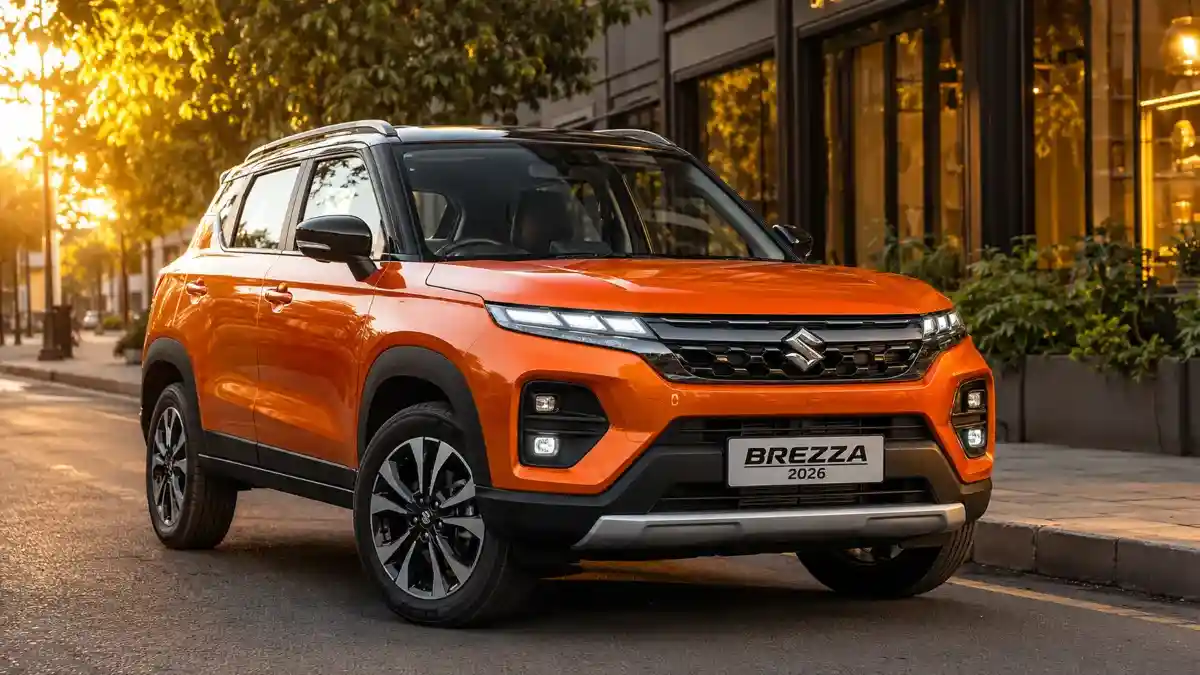
Maruti Suzuki launched the 2026 Brezza facelift in India on July 24, 2026, priced from ₹7.40 lakh to ₹12.89 lakh ex-showroom (approx. US$7,670–$13,360). The headline update is a new 1.0-litre turbo-petrol engine making 108bhp/170Nm, alongside a larger 10.1-inch touchscreen, a fresh front fascia, and a 5-star Bharat NCAP safety rating.
2026 Maruti Suzuki Brezza facelift is now on sale, marking the first major update for the second-generation model since it launched back in 2022. It’s a mid-cycle refresh rather than a ground-up redesign, but the changes under the bonnet matter more than the styling tweaks on top.
What’s New Under the Skin
The centerpiece is a new 1.0-litre, 3-cylinder Boosterjet turbo-petrol engine, borrowed from Maruti’s Fronx, producing roughly 108bhp and 170Nm of torque. It’s exclusively paired with a 6-speed manual gearbox for now.
The familiar 1.5-litre naturally aspirated petrol carries over largely unchanged, good for around 103bhp and 139Nm, with a choice of 6-speed manual or 6-speed torque-converter automatic.
CNG buyers get a genuine functional upgrade: the tank moves from the boot to an underbody mount, borrowed from the Victoris, freeing up cargo space that CNG variants have historically sacrificed.
Design and Cabin Updates
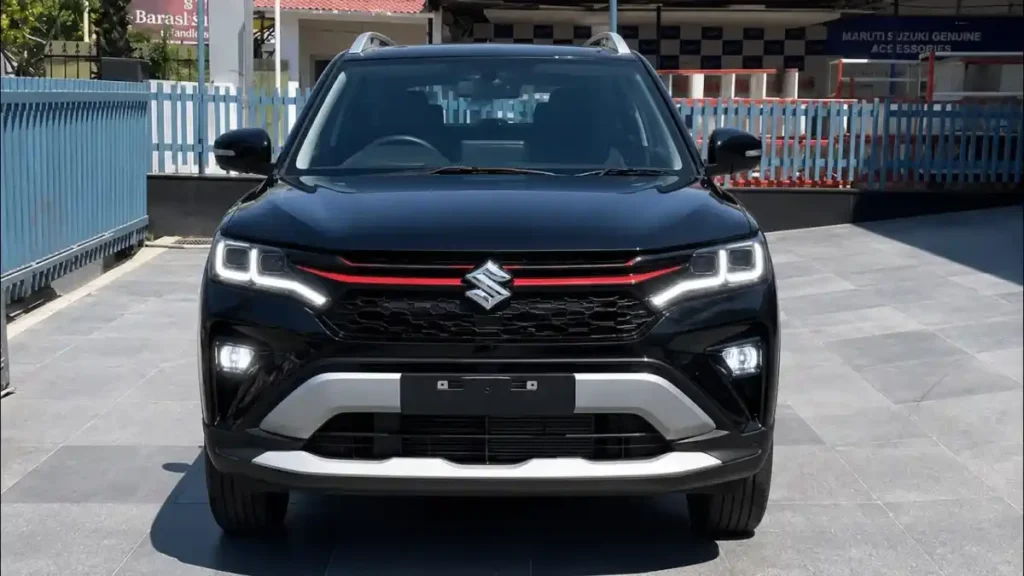
Changes outside are deliberately restrained. The Brezza gets a revised grille with new chrome detailing, a reworked front bumper with fresh fog lamp housings, and new 16-inch dual-tone alloy wheels. The existing LED headlamps and tail lamps carry over unchanged.
Two new exterior colors — Vivacious Orange and Lustrous Beige — join the existing palette.
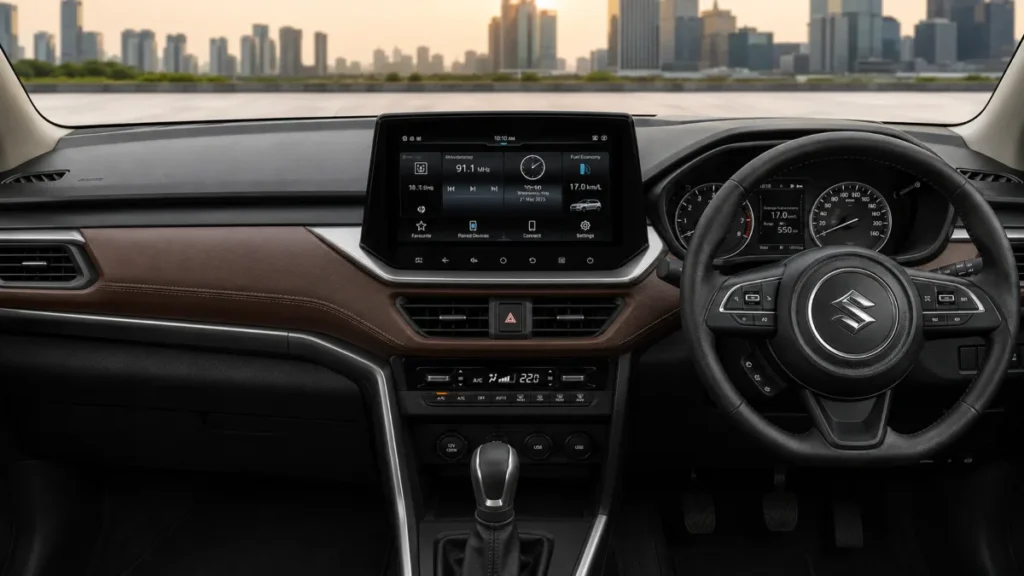
Inside, a black-and-brown theme with gloss black trim replaces the previous cabin color scheme. The bigger news is a larger 10.1-inch touchscreen (up from the outgoing unit), a revised climate control panel borrowed from the Victoris, ventilated front seats, an air purifier, and a wireless charger with active cooling.
Variants, Features and Safety
The Brezza facelift is offered across four grades: LXi, VXi, ZXi, and ZXi+. Depending on variant, buyers can add a 360-degree camera, blind-spot monitoring, rear cross-traffic alert, safe exit warning, front parking sensors, and a tyre pressure monitoring system.
Maruti has also confirmed a 5-star Bharat NCAP rating for both adult and child occupant protection, with six airbags, ISOFIX child-seat anchors, hill-start assist, and electronic stability control standard across the range.
Mileage: How Efficient Is the New Turbo?
Inspecting the spec sheet reveals a small efficiency trade-off for the added performance. ARAI-certified figures put the 1.0-litre turbo-manual at 20.47kmpl (LXi/VXi) and 19.96kmpl (ZXi/ZXi+) — roughly 47–48mpg (US) equivalent.
The carryover 1.5-litre manual actually returns slightly better economy, at 21.09kmpl in entry trims, while the automatic comes in around 20.17kmpl. CNG variants remain the efficiency leader at 26.90km/kg across all three CNG-eligible grades.
Pricing and Where It Sits Against Rivals
At ₹7.40 lakh to ₹12.89 lakh ex-showroom, the new turbo-petrol entry point undercuts the outgoing Brezza’s starting price by close to ₹1 lakh — a rare case of a facelift getting cheaper, not pricier, at its base.
That positions it squarely against the Hyundai Venue, Tata Nexon, Tata Punch, Mahindra XUV 3XO, Skoda Kylaq, and Kia Sonet in India’s crowded sub-4-metre SUV segment, with the newer Kia Syros also circling the same buyers.
Geographic Availability
The Brezza nameplate is currently an India-and-emerging-markets model, sold internationally in right-hand-drive markets across parts of Asia and Africa. Neither Maruti Suzuki nor parent company Suzuki has announced plans to bring the new turbo-petrol powertrain to European or North American lineups, where Suzuki’s four-wheeler presence has scaled back in recent years.
The Turbo Is a Tax Play as Much as a Power Play
The most consequential number in this launch isn’t 108bhp — it’s 999cc. By keeping the new turbo engine just under the 1.2-litre threshold, Maruti preserves the lower GST and cess bracket that applies to small-displacement petrol SUVs under 4 metres in India, a tax structure rivals like the Nexon and Venue’s larger-displacement variants can’t always access. That’s very likely why the turbo model undercuts the outgoing Brezza’s starting price despite adding performance — the savings are structural, not just promotional. It also explains why the underbody CNG tank first seen on the Victoris is now filtering down to the Brezza: sharing that hardware across models spreads its tooling cost over higher volumes. Expect rivals still running naturally aspirated or larger-displacement engines in this segment to face pressure to follow Maruti into sub-1.2-litre turbo units of their own, purely to stay price-competitive at the entry trim.
What’s Still Unclear
Maruti hasn’t yet confirmed whether the turbo-petrol engine will eventually be offered with an automatic transmission — currently it’s manual-only. Level 2 ADAS, floated in pre-launch reports, wasn’t confirmed among the officially listed safety features at launch, so it’s unclear if or when it arrives on the Brezza range.
Global Spec Comparison
| Spec | 2026 Maruti Brezza (Turbo) | Hyundai Venue | Tata Nexon | Kia Sonet | Skoda Kylaq |
|---|---|---|---|---|---|
| Price (INR / USD, from) | ₹7.40L / ~$7,670 | ₹7.94L / ~$8,230 | ₹8.00L / ~$8,290 | ₹8.00L / ~$8,290 | ₹7.89L / ~$8,180 |
| Power/Torque | 108bhp / 170Nm | 118bhp / 172Nm (turbo) | 118bhp / 170Nm (turbo) | 118bhp / 172Nm (turbo) | 114bhp / 178Nm (turbo) |
| Top Speed | Not officially disclosed | Not officially disclosed | Not officially disclosed | Not officially disclosed | Not officially disclosed |
| Fuel Economy | 19.96–20.47 kmpl (~47–48 mpg) | ~18.1 kmpl (turbo) | ~17.4 kmpl (turbo) | ~18.4 kmpl (turbo) | ~19.8 kmpl (turbo) |
| Primary Global Competitors | Venue, Nexon, Sonet, Kylaq, XUV 3XO, Punch | — | — | — | — |
Rival pricing and mileage figures are approximate current ex-showroom Indian-market benchmarks, not independently re-verified for this table. USD conversion approximate at ₹96.5/$1, July 2026.

Dhanush H M is a passionate automotive journalist, rider, and tech analyst specializing in global motorcycle developments, electric mobility (e-2W), and two-wheeler engineering. At Motospoke.com, Dhanush leads coverage on major global launches, motorcycle safety technology, performance specs, and EV battery advancements across North American, European, and Asian markets.
With years of track, road, and technical testing experience, Dhanush focuses on stripping away marketing hype to deliver honest, data-backed insights for everyday commuters, adventure riders, and track enthusiasts alike.

9870 me