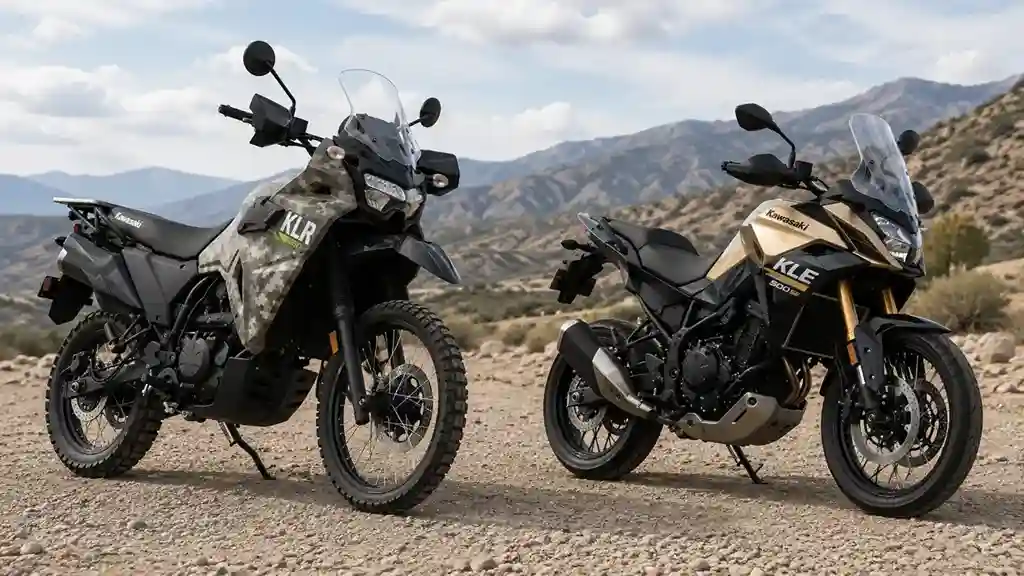
Kawasaki now sells two very different machines under its adventure/dual-sport umbrella: the veteran 652cc single-cylinder KLR650, from $6,999, and the all-new 451cc parallel-twin KLE500, from $6,599. Independent testing shows the KLE500’s twin makes roughly 10 more peak horsepower than the KLR650’s single, despite giving up 201cc of displacement, while the KLR650 holds the torque and off-road-capability edge.
Kawasaki KLR650 buyers now have company in the showroom, not just competition from Honda and Suzuki. For 2026, Kawasaki’s lineup includes the KLE500 — the brand’s first officially US-marketed “Adventure” model — sitting just below the KLR650 on the price list and aimed squarely at newer riders.
Two Adventure Bikes, One Kawasaki Showroom
The KLR650 needs no introduction to dual-sport riders: introduced in 1987, discontinued in 2019, and revived in 2022 with fuel injection and a redesigned chassis, it remains available in five 2026 trims — KLR650, KLR650 ABS, KLR650 S, KLR650 S ABS, and KLR650 Adventure ABS.
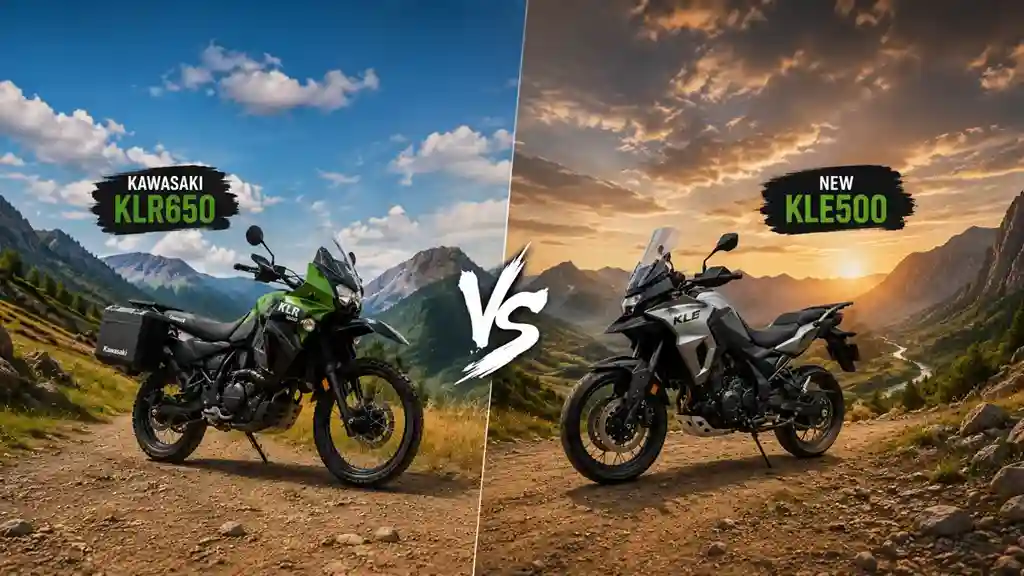
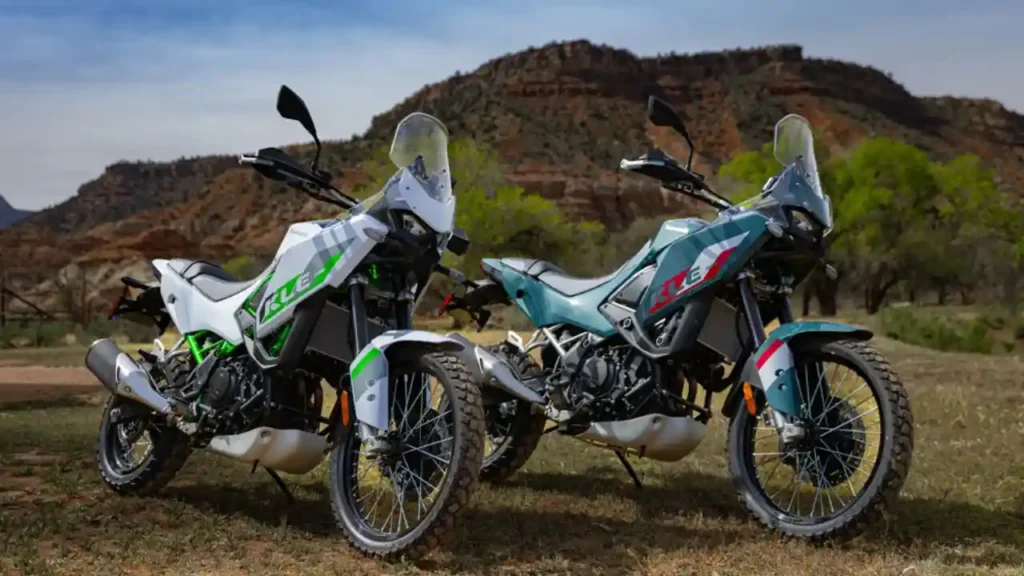
The KLE500 is new to America but not new to the world. Kawasaki has sold KLE-badged bikes internationally for decades, including a run in the 1992 Paris-to-Cape Town rally. For 2026, it finally gets an official US release, built around the 451cc parallel-twin already doing duty in the Ninja 500, Z500, and Eliminator.
What Kawasaki Publishes vs. What Independent Dynos Show
Kawasaki’s own spec sheet lists the KLR650 Adventure ABS at a claimed 40hp at 6,000rpm and 39.1 lb-ft of torque at 4,500rpm. The numbers tell part of the story, but those are crankshaft figures, and Kawasaki has historically avoided publishing rear-wheel output.
Independent dyno testing tells a slightly different tale. Cycle World’s in-house Dynojet has recorded KLR650 variants between roughly 34.6 and 36.9 rear-wheel horsepower across recent model years — the normal gap between claimed crank output and what actually reaches the ground.
Kawasaki hasn’t published equivalent crank figures for the KLE500 yet, but Motorcycle.com’s back-to-back testing found the twin-cylinder KLE500 produces about 10 more peak horsepower than the KLR650, while the KLR650 holds a roughly 7 lb-ft torque advantage despite its lower-revving nature.
Engine Philosophy: Single vs. Twin
The KLR650’s 652cc single is tuned for a flat, tractor-like power curve from as low as 2,000rpm, prioritizing low-end pull over outright peak numbers — the same formula that’s kept it a favorite for long-range and off-road-focused riders for decades.
The KLE500’s twin, borrowed from Kawasaki’s street-naked and sport lineup, breathes through a larger airbox and revised intake for its adventure duty, but reviewers note it doesn’t necessarily feel smoother at speed — ADV Pulse found vibration creeping in past 75mph, on par with the KLR650’s single despite the twin-cylinder layout.
Pricing and Trim Breakdown
At the entry level, the KLE500 undercuts the KLR650 by $400 — $6,599 versus $6,999. The KLE500 SE trim adds a $900 premium over the base bike, landing at $7,499.
On the KLR650 side, ABS adds roughly $300 across the range, and the fully-loaded Adventure ABS trim — with factory side cases, fog lights, and extra electrical outlets — lists at $8,984 including destination charges, according to recent pricing coverage.
Kawasaki Is Now Segmenting Its Own Customer Base
Kawasaki isn’t simply replacing the KLR650 with something newer — it’s deliberately splitting its adventure-curious buyers into two camps. The KLE500’s lighter weight, lower seat height parity, and street-derived twin make it the obvious pick for riders coming from naked bikes or first-time adventure buyers who want a gateway machine without committing to true expedition-grade equipment. The KLR650, meanwhile, keeps its low-end torque, bulletproof parts availability, and 6.1-gallon tank aimed at riders who actually plan to cross continents on it. This is the same playbook Honda has run with its Transalp and Africa Twin lineup — a lighter, more accessible model feeding riders upward rather than one bike trying to do everything. The risk for Kawasaki is cannibalizing KLR650 sales among buyers who’d have stretched for the “real” adventure bike anyway, now that a cheaper, peppier alternative sits one shelf over.
Geographic Availability
Both bikes are currently sold in the US market under these specs and pricing. The KLR650 platform is also distributed internationally under the same nameplate. The KLE500 name has a longer international history than its US debut suggests, though Kawasaki hasn’t detailed whether this specific 2026 US-spec version will roll out to European or UK dealers on the same timeline.
What’s Still Unclear
Kawasaki hasn’t published official crank horsepower for the KLE500, so a direct claimed-spec comparison with the KLR650 isn’t yet possible — only the relative gap reviewers have measured in back-to-back testing. Independent rear-wheel dyno numbers for the KLE500 also haven’t surfaced yet at the time of writing.
Global Spec Comparison
| Spec | Kawasaki KLR650 (Adventure ABS) | Kawasaki KLE500 | Suzuki DR650S | Honda XR650L | KTM 690 Enduro R |
|---|---|---|---|---|---|
| Price (USD, from) | $6,999 (base) / $8,984 (Adventure, w/ fees) | $6,599 / $7,499 (SE) | ~$7,099 | ~$7,099 | ~$10,999 |
| Power/Torque | 40hp / 39.1 lb-ft (claimed); ~35–37 whp measured | ~10hp more than KLR650 (measured, per Motorcycle.com); torque ~7 lb-ft less | Not officially published | ~40hp (comparable to KLR650) | ~74hp / ~50 lb-ft |
| Top Speed | ~90 mph (unofficial) | Not yet independently tested | Not officially published | Not officially published | Not officially published |
| Fuel Economy | ~40–48 mpg (unofficial); 6.1-gal tank | Not yet published | Not officially published | Not officially published | Not officially published |
| Primary Global Competitors | KLE500, Suzuki DR650S, Honda XR650L, KTM 690 Enduro R | KLR650, Royal Enfield Himalayan, Honda Transalp (larger class) | — | — | — |
US-market pricing and specs only; neither the KLR650 nor KLE500 in this specific configuration has confirmed EU/UK availability. Unofficial figures are independently reported/tested, not manufacturer-published.

Dhanush H M is a passionate automotive journalist, rider, and tech analyst specializing in global motorcycle developments, electric mobility (e-2W), and two-wheeler engineering. At Motospoke.com, Dhanush leads coverage on major global launches, motorcycle safety technology, performance specs, and EV battery advancements across North American, European, and Asian markets.
With years of track, road, and technical testing experience, Dhanush focuses on stripping away marketing hype to deliver honest, data-backed insights for everyday commuters, adventure riders, and track enthusiasts alike.
